Donkey Derby Days Event
JUNE 26-28, 2026
Donkey Derby Days has been the primary fundraiser for the Two Mile High Club since 1931. This annual three-day festival serves as the largest fundraiser for the Club, which provides essential support for the Cripple Creek Donkeys. Donkey Derby Days celebrates our region's rich history and the significant role that donkeys played in that history.
The celebration includes music, an annual parade, Donkey Derby Races, great food, family attractions, and vendors. People come from all over the nation to celebrate this favorite festival!
To see what the Two Mile High Club has in store for the weekend.
https://www.cripplecreekdonkeys.com/
The Two Mile High Club has requested to have the Professional Pack Burro Races back!
Since 1931, Donkeys have been a part of the History of this great Event!
(Not a continuously running event)
Welcome!
Donkey Derby Days Pack Burro Race (DDDPBR)
-Event-
Donkey Derby Days Pack Burro Race
Sunday, June 28, 2026
12 pm Noon Start
Start/Finish – 172 E. Bennett Ave. Cripple Creek, Co. 80813
-Event Organizer-
Brad M. Wann
303-906-2269
-DDDPBR Board of Directors-
Brad Wann – Race Director
Dale McKenzie – Town Director
Keith Blessing – Course / Safety Director
Chris Bilardi - Course / Safety Director
Amber Wann – Rental Director
-Map of Event-
-Contacts for Event-
-Contact for questions about the event-
-Special Note-
Inaugural Donkey Derby Days Pack Burro Race – First professional PBR since 2007 in Cripple Creek!
-What is Pack Burro Racing-
Pack burro racing is a sport indigenous to the State of Colorado which is deeply rooted in the state’s mining heritage. In the early days of the mining industry in Colorado, miners would take burros, which is the Spanish word for donkeys, through the mountains of Colorado while prospecting. Because the burros were carrying supplies, the miners could not ride the animals and so they would walk, leading the donkey. Legend has it two miners struck gold in the same spot and raced back to town to make their claim. Hence, the sport of pack-burro racing was born.
The current day Burro Races, which are held throughout small towns in Colorado, commemorate these men and women and their burros. In 2012, Pack burro racing was recognized as the official summer heritage sport in Colorado. HJR12-1021
-Weather Plan –
Race Director, Brad Wann will be monitoring the weather. Any safety issues arise a shutdown or pause of the race will happen. He will work with the Teller County Search and Rescue on determining Safty.
-Camping-
Teller County Fairgrounds 500 Co Rd 1 Cripple Creek Co. 80813
Details to come..... Reach out to Race director if questions.
-Day of Parking-
Teller County Fairgrounds 500 Co Rd 1 Cripple Creek Co. 80813
-Day of Operations Plan-
7/28/2026 The Start/Finish line will be set up on 172 E Bennett Ave Cripple Creek Co. 80813 @ 8am. Meeting with volunteers will be at 11am at the start/finish line (172 E. Bennett Ave). Check Point and Traffic Guards in town will be placed at Street intersections along the route for the start of the race for traffic control @ 11:50am. Once the Teams have passed, Only Traffic Guard #1 and Check Point #1 will stay as they will assist in return teams. All other Check Point and Traffic Guard once all teams have passe will return to the Start/Finish.
-Crowd Control Start/Finish-
7/28/2026 DDDPBR will put up ropes along the Start/Finish for 300 feet on each side of Bennett Ave. Crown will be educated with the Colorado Equine Act, sign will be presented.
-Start/Finish Line-
There will be a chip timing station keeping track of the teams stationed at the finish line. Also 2 way radio communicating with the Check Point #1, #2, #3, and #4 letting us know positions of the Teams. There will be coolers with hydration for the humans and water for the Burro’s.
-Walk to start line-
11:45am 50-100 teams will gather at E. Bennette Ave and S. Second St.
-Distance-
6 miles
-Start of Race-
Start of race will be 12pm sharp (Blank Gun Start). Start and Finish line will be on 172 E Bennett Ave Cripple Creek Co. 80813 Racers will be facing west on E. Bennett Ave. and travel west on E. Bennette Ave after start, Turn North on N. C st. banks East and turns into Galena Ave. Turn North on McKenney St. Follow signs
-Return Route-
Top teams will hit the East side of town at around 12:45am. Entering town on Main Street heading South. At Gold King Mountain Inn the teams will hit Galena Ave. head West. Tuns into N. C St. turn South. East on West Bennett Ave. to the Finish Line.
-Events at the Start/Finish Line-
Start of the race – 12 pm sharp!
Poop Drop at the Start Line (12pm -12:15)
500 taped squares on the ground 2’x2’ squares. The square with the most poop gets $500.00 $10 per square for purchase at www.poopdrop.com
Poop Drop Pick Up (12:15pm-12:30pm)
4 types of poop pick up tools are place one block away. The team(2 person) that pick up the most poop in 10 minutes wins $100.00
Possible – Mini Donkey Races (12:30pm-1:30pm)
Race a mini donkey for one block and back. The person that has the fastest time will win @1:30pm wins $100.00! $20 dollars for entry.
-Awards-
Awards will be held as the team’s finish.
1st Place $600.00 4th Place $300.00
2nd Place $500.00 5th Place $200.00
3rd Place #400.00 6th Place $100.00
-Alcohol-
DDDPBR will not provide any Alcohol for this event.
-First Aid-
There will be first aid kits with each Check Point and Start and Finish Line.
-Trailer Parking-
Trailer parking will be at Teller County Fairgrounds.
-Check Points -
All Check Points will have first aid kits, water, and communications. See on map.
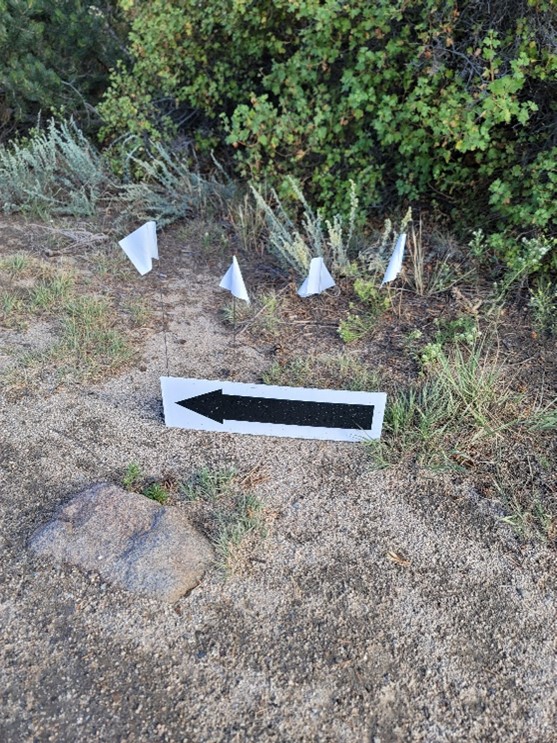
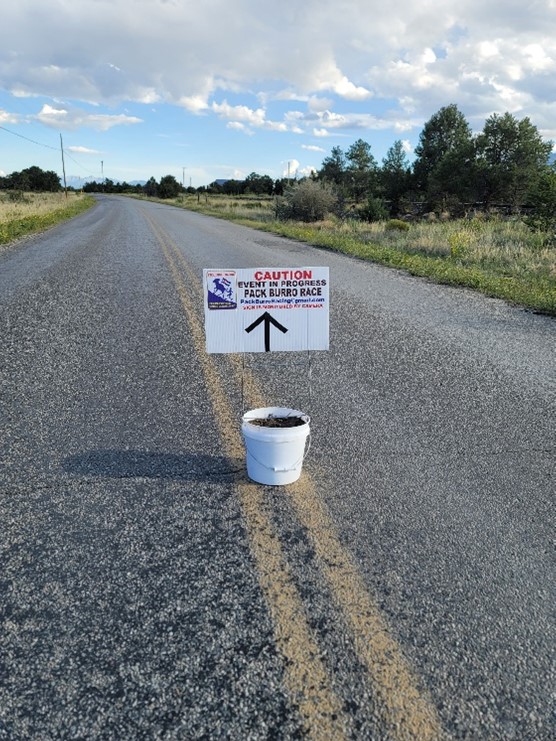
-Signs On Course-
A brief history of the donkeys that now run Pack Burro Races
Donkeys first arrived on US soil in 1784 as a royal gift from King Charles III of Spain to George Washington. The donkeys first worked the plantations, but by the 1800s were helping to build the American West. They were used by miners during the Gold Rush era, but by the turn of the century, many of these hearty little donkeys were abandoned. The donkeys found ways to survive the most unforgiving, yet extreme terrains around the American West. Resilient, they can feed on desert vegetation. While herds of wild burros now face the same threats today as wild horses, they are also being rounded up and domesticated. After being gentled and trained, many who run their donkeys find that the running activities are quite therapeutic and offer a great outlet for rehabilitating once wild and/or feral donkeys.
“Burro” is the Spanish word for small donkey. However, many different sized donkeys from mini to mammoth can race in a Pack Burro Race and are interchangeably called “burro.” They only have chestnuts on the forelegs, while animals of the same equine family, such as mules (a hybrid cross between a donkey and horse) or horses, have these chestnuts on the hind and forelegs. The tail of a donkey has shorter hair, except on its lower part, which has a brush. Only a burro/donkey is allowed to run in a Pack Burro Race as we do nothing half-assed.
The Rules ~
Pack Saddle & Paraphernalia Requirements
Each burro must be equipped with a packsaddle packed with the prospector's paraphernalia, including a pick, gold pan, and shovel (no toys permitted). There is no minimum weight requirement for the paraphernalia. If any of these items are missing or get lost on the trail, the runner/burro team will be disqualified (DQ).
Lead Rope
The burro must be outfitted with a lead rope for handling that is attached to a halter (a flat-nosed halter is preferred for safer racing over rope halters which tend to get loose and shift on the burro’s face, yet rope halters are a better tool for groundwork training). The runner may only be attached to the burro with a single lead rope that does not exceed 15 feet in length (measured from the end of the rope to the tip of the snap). The lead rope may only be connected to the halter.
Control of Burro
Burros are controlled by way of the runner handling a lead rope that is attached to the halter of the burro. All runners must keep their burro under control on the course, and not cut switchbacks (except for a single-track trail, runner/burro teams can pass as long as they remain near the course edge if slower teams are blocking the course or obstructing the advancement of another team). If the runner/burro interferes with another runner/burro team, the out-of-control team may be disqualified or given a warning. If the runner loses control of their burro, by way of dropping the lead rope, the team must return to the point where the lead rope was dropped to stay in the race in order to not obtain a DQ. We encourage you to take your burro back and not give up on your burro’s race to get an honorable finish.
Jack/Stud Chains
Jack/Stud chains may be used with a pressure-release technique, to safely control a higher-spirited burro. (A jack/stud chain is a chain or strap which is used to apply pressure over the muzzle or under the chin.) Any racer coming across the finish line with any injuries on the burro resulting from the jack/stud chain may be disqualified.
Team = 1 Runner & 1 Burro
The runner and burro starting this race must remain a team throughout the race. No assistants will be allowed to accompany any team. Spectators or anyone outside of the race are not allowed to assist the forward progress of any team. No swapping burros with another runner or both teams will be disqualified (“You gotta dance with the one that brung ya.” ~ Curtis Imrie). The winning combination consists of a runner and burro, who must cross the finish line as a unit. The runner may be leading or following the burro, but the burro's nose crossing the finish line first constitutes the winner. In the event of a tie, the prize money involved, if any, will be equally divided between the teams involved. However, this is ultimately up to the race director’s discretion.
The runner may push, pull, apply pressure release, or carry their burro across the finish line, but no riding is allowed!
Veterinary Checks
Burro owners may consider getting a veterinary check on their burro before every race. Sick or injured burros should not race. Out-of-state burros will be required to obtain a negative Coggins test and health certificate before entering the state as required by state law.
Other Disqualifications
Any runner mistreating their burro will be disqualified. No needles, electric prods, drugging, clubs, or whips, other than the lead rope, may be used.
Should a runner be disqualified by a race official, he/she may continue the race and appeal his/her grievance to the race director. The decisions of the race director will be final.
No Firearms
Carrying and use of firearms while running is not permitted.
Participant Waivers/Release of Liability
No town, county, or private property owners along the course, sponsoring businesses, governmental agencies, persons, volunteers, race officials, or organizations will be liable in case of accident or injury to the runner or burro. Each runner must sign a waiver and/or release of responsibility before the race.
Colorado Equine Act
"Colorado - WARNING - Under Colorado Law, an equine professional is not liable for an injury to or the death of a participant in equine activities resulting from the inherent risks of equine activities, pursuant to section 13-21-119, Colorado Revised Statutes."
Rules revised Feb 2023
Colorado:
Clear Creek County Pack Burro Race Series (Georgetown and Idaho Springs)
Creede Donkey Dash
Donkey Derby Days Pack Burro Race
Victor’s Gold Rush Challenge Pack Burro Race
Buena Vista Pack Burro Race
South Fork Alder Ass Race
Frederick Miners Day Pack Burro Race
Rollinsville Pack Burro Race
Inyokern, CA- Run with the Burros
Topsfield, MA- Run with the Burros
~~~~~~~~~~~~~~~~~~~~~~~~~~~~~~~~~~~~~~~~~~~~~~~~~~~~~~~~~~~~~~~~~~~~~~~~
Additional Information ~ (for the new-to-pack burro racing runners)
Supply Suggestions:
Comfortable running clothes
Trail shoes with good tread
Gloves (sports type full or fingerless weight lifting style, to prevent rope burn from lead rope)
It is strongly recommended that all runners or burros carry the following, for the runner:
At least one quart of water
Food (energy bar or snacks)
A few other optional items you may want to have with you on your journey:
Gallon baggies to keep your phone or items clean and dry in the saddle bags
Rain jacket or windbreaker
Sunscreen
Hat
Sunglasses
Lip balm
Gaiters (over shoes to keep the rocks out)
Tweezer/comb (to remove cactus, etc)
Hoof pick (in case the burro gets a rock in their hoof)
Burro treats are best saved for after the race, as allowing a burro to eat during a race can slow them down. Do not let children feed burros out of their hands to prevent a finger from being mistaken as a treat! Do not feed anyone else’s burro unless you have permission from the owner.
Handling Suggestions:
For runners renting burros, you should be getting all your racing lessons through that operation, but for those who are new to Pack Burro Racing with your own new burro, here are some handling suggestions you may want to know, so your first race is successful and safe:
Study the course maps before any race.
Know that the super fast, super competitive athletes start on and near the starting line. The average paced runners will start in the middle of the starting line area (between the front and the back) and slower runners or those needing to start out slowly to have better control over their burros start near the back of the pack. If it is your burro’s first-time racing and they have never experienced a group training run with multiple burros, it is highly advisable to start in the back, as burros can get excited about running in a herd. They will surprise you with how excited and fast they will get for the first time until they get used to the pace of racing.
Since burros are right-brain thinkers, most runners start and race on the left side of the burro.
It is advised to hold the halter down low next to the nose to keep your burro under control at the start of the race (especially when the blank gun goes off). This will not only prevent your burro from getting away from you too fast, but control them from kicking others in tight quarters as the field takes off and spreads out.
We know that burros do not always run in a straight line and can often zig-zag on a wider road or jeep trail, or cut-off other teams, as it is not polite that a runner extends their lead rope across the trail blocking other teams from passing.
If your burro becomes too hard to handle and you are close to the nose, you can grab the halter low at the nose and turn the burro toward you to the left in a circle until they calm down. To control the nose is to control the burro.
If you lose your burro, please yell out to others ahead, “LOOSE BURRO!” for safety reasons, as an uncontrolled burro can startle other teams. If someone else’s burro ends up loose, but you can keep control of your burro, it is a courtesy to catch that loose burro and tie it to a tree (or stationary object like a road sign) rather than have that burro and its lead rope interfere with your race. It is about safety for the burro and others.
If your burro stalls out, instead of pulling with constant pressure, consider the pressure-release technique, while you are looking forward to where you want the burro to go. As a face-to-face stand-off playing tug-of-war will not get you moving in the right direction. Jiggling the lead rope and saying “hup-hup” from behind works at times.
Also, if you are a vocal runner or need to say “hee-yaw, hup-hup,” or something like it to keep your burro motivated, just know being too vocal will not only desensitize your burro and become too much pressure sending your burro off course, but it could also annoy the other burros and runners around you. So, when your burro is running well and moving forward, quiet your voice and hold the lead rope steady (which is a nice release of pressure for the burro), and the occasional “good boy or good girl” in a positive tone is nice, too.
When holding your lead rope, make sure it is not wound tight around your hand. You could use big loose loops that do not drag the ground so you or the burro do not trip or get a leg entangled. We do not advise anyone to tie or knot the lead rope around their body. Runners may hold the lead rope around them in a way that if they trip & fall the lead rope will not be attached, as we do not want runners to get drug. Some burro owners do wear belt-in systems that they have trained with that feature a quick-release button. If the entire system does not exceed 15 feet and the runner has signed a waiver, they do this at their own risk.
On an out-and-back course, give the leaders who will be racing fast the right of way, but hang onto your burro’s halter at the nose, so they do not turn to follow the leaders.
It is best to drive burros uphill with the runner behind, instead of dragging burros uphill if possible. For the first-time racer, it is best to be in front of your burro on the downhill, holding your arms out to not let them pass you, as burros can pick up speed and you do not want to trip or lose your burro.
Be mindful of your saddle getting loose and potentially sliding to the side before it goes completely underneath, as the burro can lose belly size from gas or pooping on the course. You might have to step off the course to adjust the saddle. If your saddle pad has a tendency to slip or shift while racing, you may consider tying or attaching the pad to the saddle if you do not have stay on pads. It is ok for participants to help other participants with each other’s saddles if they choose. If the courtesy of a spectator is all you have for safety reasons, they may help hold your burro if you are readjusting your saddle, as long as they do not assist the team with forward progress.
Once the race is over, please do not backtrack on the course, so you do not interfere with others who may be racing in.
If you do not take your burro back to their trailer right away, please do not leave it unattended in town.
If it’s your first pack burro race, and you have questions, reach out to the race directors for additional information if you would like.
If you DNF = “Did Not Finish,” and do not cross the finish line, please make sure you inform the race officials of your status (before leaving town), so you are accounted for.
We look forward to seeing everyone and having a fun and safe pack burro racing season for all involved!!!